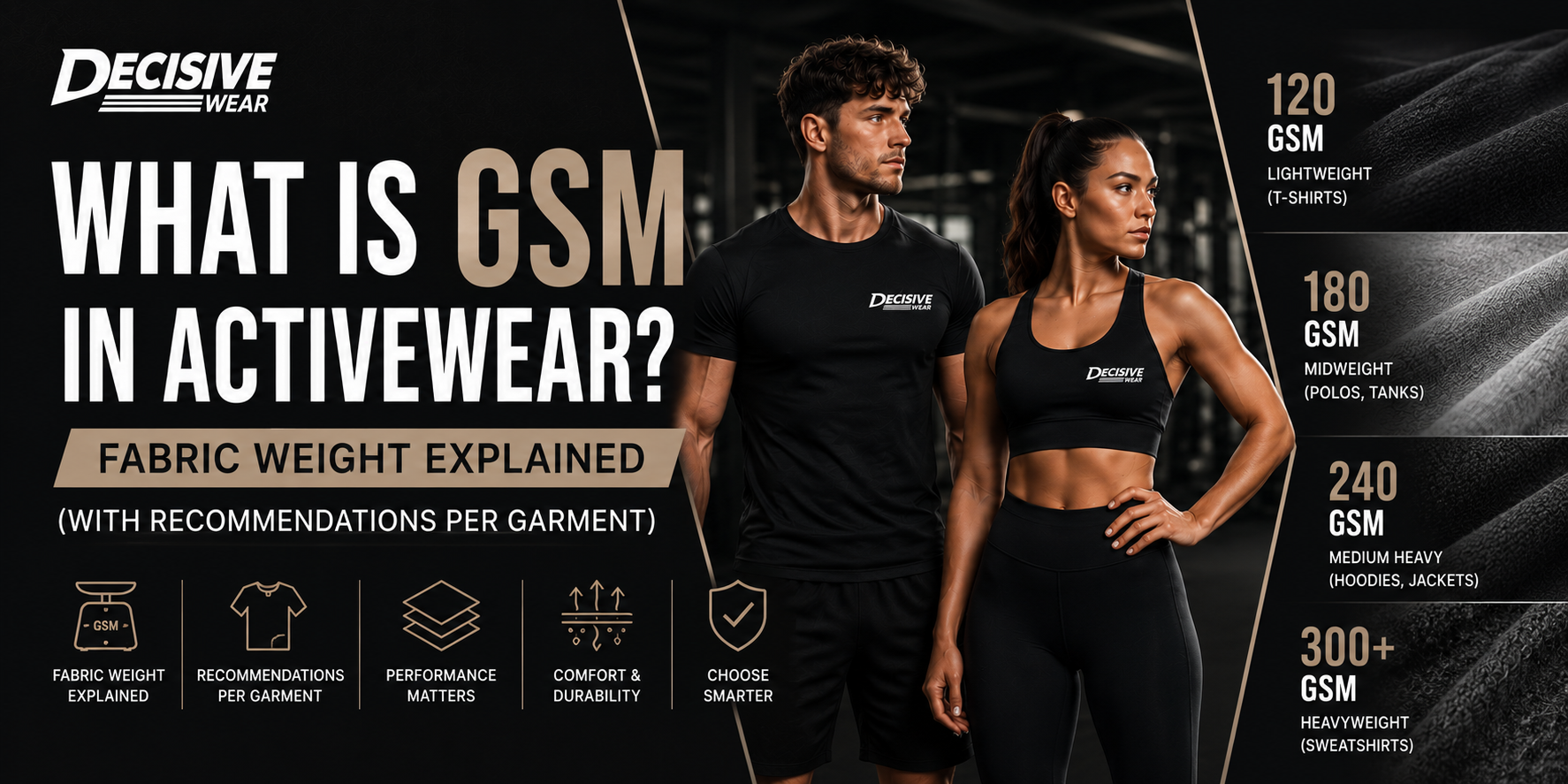
GSM in activewear stands for “grams per square metre” — it measures how much one square metre of fabric weighs. In other words, GSM tells you the weight and density of a fabric. A higher GSM means a thicker, heavier, more opaque fabric. A lower GSM means a lighter, more breathable one. It is the single most useful number on any fabric specification sheet.
Why does it matter so much? Because GSM quietly decides how your finished garment performs. For example, it determines whether leggings turn see-through in a squat. It also decides whether a t-shirt feels premium or flimsy, and whether a hoodie keeps its shape after ten washes. Therefore, if you’re building an activewear brand, GSM should be one of the first questions you ask your manufacturer — not an afterthought.
How GSM in Activewear Is Measured
The measurement itself is simple. A circular cutter punches a precise sample from the fabric roll. Next, the sample is weighed on a calibrated scale, and the result is converted to grams per square metre. As a result, GSM is objective — unlike vague terms such as “premium feel” or “thick fabric”, it can be verified on delivery.
However, one caution before the numbers. GSM measures weight, not quality. Two 250gsm fabrics can perform very differently depending on fibre content, knit structure and stretch recovery. Consequently, GSM works best as a starting filter. After that, fibre and construction decide the rest. This is exactly why we send physical swatches — you can order our fabric swatch book and feel the difference between weights before committing to production.
GSM Ranges at a Glance
| Weight class |
GSM range |
Feel & behaviour |
Typical use |
| Lightweight |
120–180 |
Airy, breathable, drapes close to the body |
Running tees, training vests, liners |
| Midweight |
180–250 |
Balanced structure and stretch, semi-opaque |
Sports bras, seamless sets, shorts |
| Heavyweight |
250–350+ |
Dense, opaque, compressive, warm |
Squat-proof leggings, hoodies, joggers |
Best GSM Per Garment: Our Recommendations
These are the ranges we recommend to brands in development, based on what performs and what customers return. Use them as your specification starting point:
| Garment |
Recommended GSM |
Why this range |
| Gym t-shirts (performance) |
140–180 |
Breathable and quick-drying; above 180 traps heat during training |
| Oversized / lifestyle tees |
220–260 |
Heavyweight drape reads as premium and holds its shape |
| Leggings (squat-proof) |
250–300 |
Opacity under 4-way stretch; below 230 risks sheerness in deep squats |
| Sports bras |
200–280 |
Support needs density; pair with the right elastane % for recovery |
| Training shorts |
140–200 |
Light enough to move, dense enough not to cling when sweaty |
| Seamless sets |
180–240 |
Knit structure adds opacity, so slightly lower GSM still performs |
| Hoodies & sweatshirts |
280–400 |
300+ is the “heavyweight” feel premium streetwear brands use |
| Joggers |
260–340 |
Structure at the knee and seat; lighter fabrics bag out quickly |
Notice the pattern. Training garments run lighter, because breathability wins during exercise. Lifestyle and lounge pieces run heavier, because weight signals quality in the hand. Meanwhile, leggings sit in a class of their own — opacity under stretch is non-negotiable, so GSM plus stretch recovery must be tested together.
Common GSM Mistakes New Brands Make
Chasing the highest number. Heavier is not automatically better. For instance, a 320gsm training tee will feel premium in the unboxing video and terrible in a spin class. Match GSM to the garment’s job, not to a marketing claim.
Comparing GSM across different fabrics. A 200gsm cotton and a 200gsm nylon-elastane behave nothing alike. Similarly, seamless knits achieve opacity at lower weights than cut-and-sew fabrics. Always compare GSM within the same fabric family.
Not verifying on delivery. GSM is checkable — so check it. A reputable manufacturer states GSM on every specification and welcomes verification. In fact, this is one of the quality-control points we cover with every brand during sampling, whether the order is a 35-piece private label run or full custom production. If you’re still deciding between those routes, our OEM vs ODM guide breaks down the differences.
Frequently Asked Questions
What does GSM mean in fabric?
GSM stands for grams per square metre. It measures fabric weight — the number of grams one square metre of that fabric weighs. Higher GSM means thicker, denser, more opaque fabric.
What is the best GSM for leggings?
For squat-proof gym leggings, we recommend 250–300gsm combined with good 4-way stretch recovery. Below roughly 230gsm, most cut-and-sew fabrics risk turning sheer under deep stretch.
What is a good GSM for gym t-shirts?
140–180gsm for performance training tees, where breathability matters most. For oversized lifestyle tees, go heavier — 220–260gsm gives the premium drape customers expect.
Is higher GSM always better quality?
No. GSM measures weight, not quality. Fibre content, knit structure and stretch recovery matter just as much. The right GSM is the one matched to the garment’s purpose.
How do I check the GSM of a fabric?
Ask your manufacturer for the specification sheet, then verify with a GSM cutter and scale on delivery. Alternatively, order physical swatches first so you can feel the weights before production.
Feel the Difference Before You Commit
Reading about fabric weight only gets you so far. Holding a 180gsm tee next to a 260gsm one settles the decision in seconds. That’s why we put our full fabric range — weights, finishes and compositions — into a physical fabric swatch book for brands in development.
Order the Decisive Wear fabric swatch book →
Speccing a collection and unsure which weights to choose? Get in touch or message us on WhatsApp — we’ll recommend GSM ranges for every piece in your range, free.